
September 21, 1938
When Ordinary Life Met an Extraordinary Hurricane

September 21, 1938. When people think of hurricanes, they seldom think of New England. For most who live there, hurricane season is not something that keeps them awake at night. Major storms are uncommon, especially when compared to the Southeast, and modern forecasting tools offer days of warning before a system reaches land. People can watch a storm develop, follow its path, and prepare with some confidence.
None of that existed in 1938. And it raises a simple question. What happens when a region that does not expect hurricanes has a Category Three storm heading their way with minimal warning?
If you’re the Boston Bees, you play baseball.
On that September Wednesday afternoon, many New Englanders found themselves face to face with a major storm system. It was an unexpected and unsettling moment. The storm’s existence was not a secret. Anyone who picked up the morning paper knew a hurricane was somewhere in the Atlantic. It had brushed past Florida and strengthened to a Category Five as it moved north. It weakened slightly in the colder waters of the North Atlantic, but far less than forecasters assumed. Storm warnings were posted from New Jersey to Maine, but the reports were vague. They offered little detail about wind speed or where the storm might come ashore.
The Boston Globe even printed a short article predicting that the system would pass Cape Hatteras on the night of the 21st or the morning of the 22nd. That was the general assumption. The storm would turn out to sea, as most did. There was no reason to believe otherwise. The Globe even declared that the storm would be a menace to shipping, not land.
But the storm did not turn. It kept moving north, faster than anyone expected, and New England was directly in its path. Rains had already started hitting much of New England over the previous weekend, priming the region for the damage that was about to come.
For people in Boston, it was essentially just another day. The American League teams were playing further inland in places like Chicago and Detroit. The Boston Bees (the temporary name of the Boston Braves) were preparing for a planned doubleheader against the St. Louis Cardinals.
Bostonians opened their morning paper to find that former mayor James Michael Curley had won the Democratic primary for governor. Curley had held nearly every high‑level office available in Boston, from Congress to City Hall to the governor’s office. He had served as governor from 1935 to 1937 but chose not to run for re‑election so he could pursue a Senate seat, the one office he would never hold. Curley was a Boston institution, for better or more often worse, and his return to statewide politics was the kind of story that usually dominated the day.
The death of Suffolk County Sheriff John A. Keliher was the lead headline in that morning’s Globe. Keliher was running for re-election and died shortly after midnight of a sudden heart attack, just as it looked like he was going to lose re-election.
The Bees had seen their scheduled game against the Cardinals on the 20th postponed by rain that had come through the day before and were set to make it up in a doubleheader.
The first game was a 4-0 win for the Cardinals, though weather had started to become a factor by the end of the game. Contemporary reports mention wind, rain, and even a bit of snow interrupting the proceedings. Despite the coming weather, the decision was made to start the second game.
And that went about as well as expected. The wind had really started to pick up and affect balls that were hit into the air. In the third inning, the umpires finally decided to call the game and give the win to the elements.
After crossing Long Island, New York, the storm made landfall on the Connecticut coast at around 4pm, somewhere between Bridgeport and New Haven. While the Bees walked off the field, the hurricane was already lashing out with a force no one had anticipated. Towns along the Rhode Island and Connecticut coasts were already being torn apart. Storm surge was pushing miles inland. Rivers were rising. Entire neighborhoods were being swept away. The storm that New England had assumed would turn harmlessly out to sea was now rewriting the region’s history in real time.
In Boston, the rain continued to fall, and the winds continued to rise. Reports of destruction began to appear in the Boston Evening Globe. The front page carried the picture of a washed-out road near Middletown, Connecticut. Reports emerged of roads in Massachusetts being closed because of the flooding caused by the storm. There was even a report of a doctor and nurse having their car washed away in central Massachusetts. The danger had arrived, even if the ability to accurately describe it was not yet there.
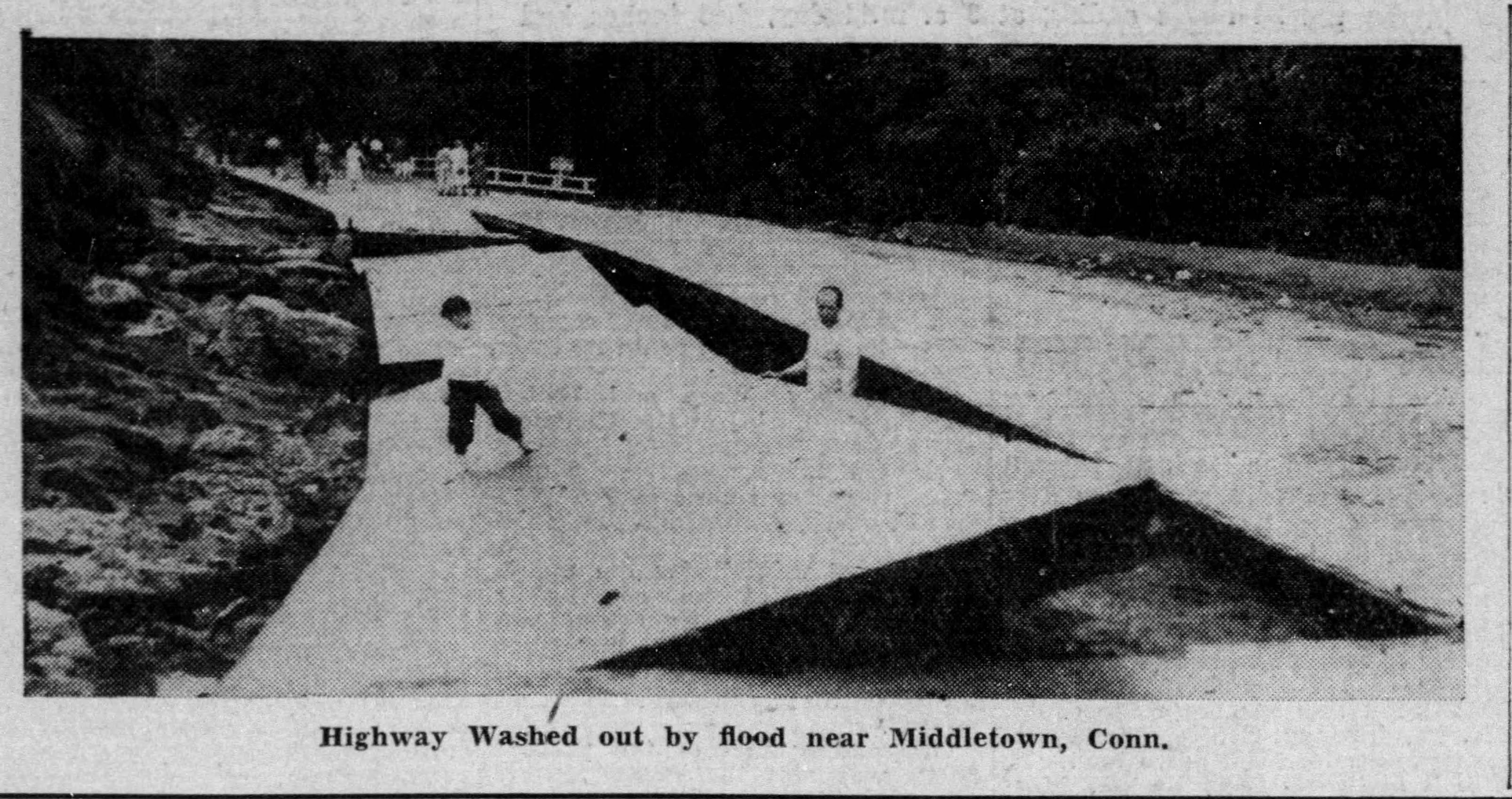
Despite the imminent and ongoing danger, the Evening Globe still referred to the hurricane as a “tropical storm” that was hitting Connecticut and Rhode Island. The United States Weather Bureau (the forerunner to the National Weather Service) maintained that winds would not exceed tropical storm force winds. They were wrong. Blue Hill Observatory in Milton, just 10 miles south of Boston recorded a wind gust of 186 MPH.
For most of the city, September 21st had begun as an ordinary day filled with politics, baseball, and the usual churn of local news. It ended as the opening chapter of one of the most devastating storms ever to strike the Northeast.
The 1938 hurricane arrived without warning, moved faster than anyone could track, and left a mark that would shape New England’s understanding of coastal storms for generations. It remains a reminder that even places that do not expect hurricanes can find themselves directly in the path of one. It is also a reminder of how quickly a natural disaster can interrupt the natural rhythms of daily life, including a game of baseball.
It is estimated that 682 people died as a result of that storm and it remains the deadliest hurricane to ever strike New England.