
May 8, 1901
The American League Arrives in Boston for the First Time

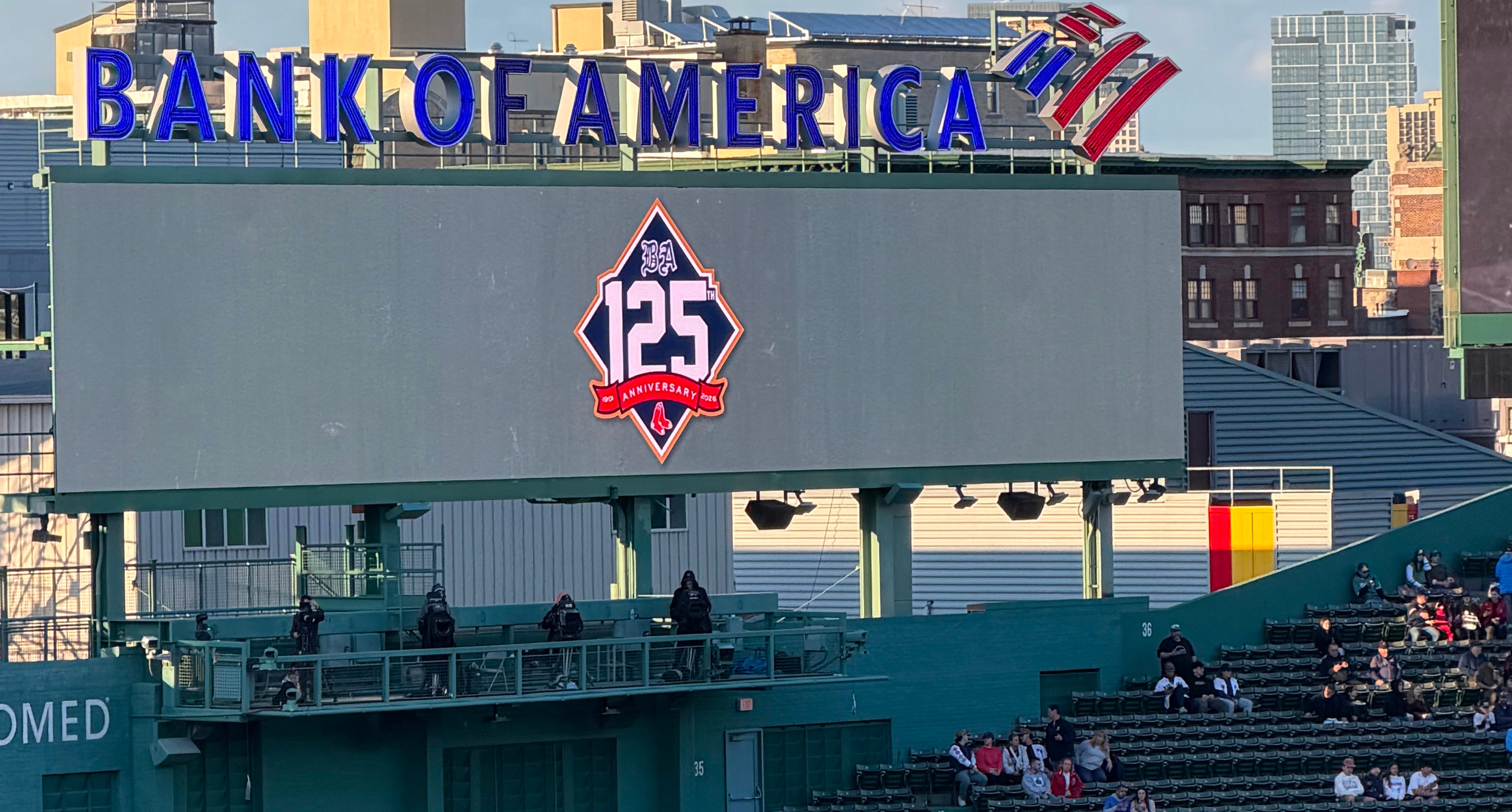
May 8, 1901 - I had a chance to attend the Red Sox game at Fenway Park on May 8, 2026. It was no ordinary game, but rather a celebration of the 125th anniversary of Boston’s first American League game, played at Huntington Avenue Grounds on May 8, 1901.
Fans in attendance saw an unparalleled assembly of Red Sox legends. To celebrate the occasion, the Red Sox brought out every living player whose number had been retired. It was a 2-0 win for the home team over the Tampa Bay Rays.
But today’s post is not about that day. After all, if you wanted to read about the events of last Friday, you wouldn’t be reading this blog. This week, we’ll explore the events of May 8, 1901, 125 years ago. In the fashion of the time, I will refer to Boston’s National League and American League franchises without the use of a nickname, such things had not been settled at that point. The American League team did not become the Red Sox until the 1908 season.
For this day’s news, we’ll review the Boston Globe and Boston Evening Transcript. The front page of the Evening Transcript carried news about President William McKinley arriving in Redlands, California, about 60 miles east of Los Angeles. Southern California was booming at the time. Los Angeles had doubled in size during the 1890s, surpassing 100,000 residents by 1900. Even so, it remained far smaller than Boston, which was home to more than 560,000 people.
Speaking of McKinley, the board of overseers at Harvard University had met that morning at 50 State St. in Boston in a special meeting to vote to give him an honorary degree. The decision was not without controversy and some graduates and alumni voiced their opposition, the reasons for which were not reported.
The murder trial of Harvard geologist Charles R. Eastman was also covered extensively. Eastman had been accused of shooting his brother-in-law on July 4, 1900. He argued that the gun had gone off by accident. The papers printed a transcript of Eastman’s cross-examination. Just a couple of weeks later, Eastman was found not guilty of the crime. He resumed his career as a geologist until his death in 1918. Like many modern readers, Bostonians were transfixed by a murder trial involving someone from a higher social stratum.
Mayor Carter Harrison of Chicago penned a letter to the Globe to correct the record regarding some recent comments. The paper had printed an interview with the mayor where he referred to Boston as a “city of dirty streets.” He clarified that he was referring to the difficulty of cleaning Boston’s streets, which were paved with macadam and granite blocks. Harrison took particular issue with the dust created by macadam paved roads and the ease with which debris can get stuck in the crevices between granite blocks. He voiced a preference for asphalt or brick for the paving of residential streets.
After taking in that morning’s news, thousands of Bostonians descended upon Huntington Avenue Grounds to get their first glimpse of Boston’s American League franchise.
Of course, Boston’s National League franchise (the modern-day Atlanta Braves) was also playing that day against Brooklyn (the modern-day Los Angeles Dodgers). As noted by Bill Nowlin in his recap of this game for SABR, the National League franchise was trying to peel away supporters from the American League team by offering free tickets. Their attempts were unsuccessful. The National League team had lost much of its working class Irish American fanbase due to both the actions of owner Arthur Soden, who wanted to court Boston’s older Yankee elite, and the fact that many popular players, including Cy Young and player/manager Jimmy Collins, had left Boston’s National League outfit for the American League.
The American League was the new kid in town, the brainchild of baseball executive Ban Johnson, who had run the Western League, a minor league based in the Midwest. Boston was home to one of the founding eight teams and they quickly surpassed their National League counterparts to become the hottest ticket in town.
The team had been expected to participate in a parade, but their late arrival by train from Washington, DC made that an impossibility. In lieu of a parade, the Boston Cadet band played to the at least 11,000 fans who had begun showing up at 1:30 PM for the 3:30 game. It was a sellout crowd with overflow onto the field with fans who could not get a seat standing behind a rope in the outfield.
The 5-5 Boston American League team took the field to take on the Philadelphia Athletics. Boston was riding a 3-game win streak and had gone 2-2 in their games against the Athletics in Philadelphia.
The fans at Huntington Avenue Grounds were treated to an exciting affair where the home team put up 11 runs and 22 hits, while committing three errors. The Athletics, on the other hand, put up four runs on 11 hits, while committing five errors. Boston scored the first 11 runs before the Athletics scored in the 7th and 8th innings. Boston’s Cy Young and Philadelphia’s Bill Bernhard pitched all nine innings.
Despite the game being a high-scoring affair, only one ball left the yard for a home run. This was not unusual during what has been termed the “dead ball era.” In the first inning, Buck Freeman hit the first home run in Boston’s American League history, putting the team up 4-0.
It was a great day for Boston’s baseball fans. At South End Grounds, the Boston National League team defeated Brooklyn, 7-6 in 12 innings. Only approximately 5,500 fans showed up to that game.
In an interesting coincidence, while the Red Sox faced the Tampa Bay Rays on the 125th anniversary, the Braves and Dodgers once again squared off on May 8, 2026, in a game played in Los Angeles, now the second largest city in the United States. The Dodgers won that game, 3-1.