
May 20, 1993
The Night Boston Said Goodbye to Cheers as the World Series Champions Came to Town

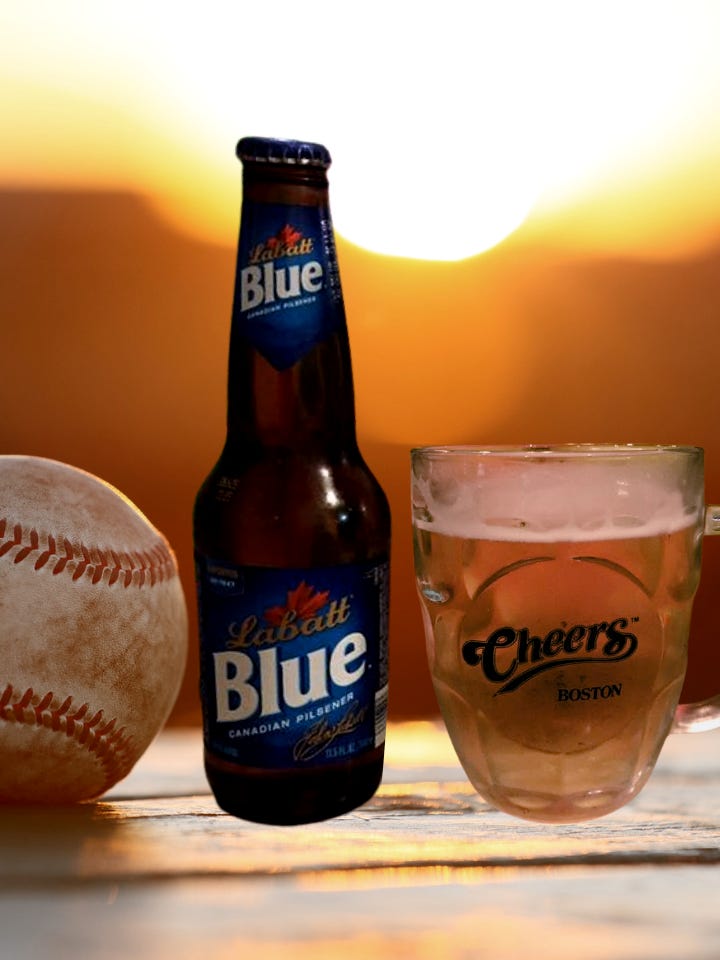
May 20, 1993 - On a rainy Thursday night in Boston, the Red Sox welcomed the defending World Series champion Toronto Blue Jays to Fenway Park. It should have been one of the bigger games of the early season. Toronto was loaded with stars like Joe Carter, Paul Molitor, Roberto Alomar, and John Olerud. The Blue Jays were the kings of baseball, a powerhouse club north of the border that would go on to repeat as World Series champions later that year.
But baseball was not the center of attention in Boston that night.
Just a little over a mile and a half from Fenway Park sat the Bull & Finch Pub on Beacon St., the establishment known to television viewers around the world as the exterior of Cheers. That evening, after 11 seasons, America was preparing to say goodbye to Sam Malone, Carla Tortelli, Norm Peterson, Cliff Clavin, and the rest of television’s most famous bar patrons.
The Cheers finale was not simply a television episode. It was a cultural event. NBC dedicated much of its primetime lineup to the show and affiliated stations across the country prepared for enormous audiences. In Greater Boston, anticipation for the finale reached extraordinary levels. More local households ultimately watched the finale than had watched either Game Seven of the 1986 World Series or Super Bowl XX.
Even Toronto became part of the phenomenon. While the Blue Jays played at Fenway Park, approximately 40,000 fans gathered inside SkyDome to watch the finale on the stadium’s massive video board. It was an unusual scene: the defending World Series champions were playing baseball in Boston while their own ballpark filled with fans to watch a sitcom set in a fictional Boston bar.
For this day’s news, we’ll once again turn to the Boston Globe. The front page carried news about Cambodia’s elections, which were being conducted under the watchful eye of the United Nations. It was an attempt to introduce liberal democracy into a country still recovering from decades of war, political instability, and the horrors of the Khmer Rouge regime. The elections would occur over the next six days.
The front page also carried news about President Bill Clinton’s dismissal of the entire staff at the White House Travel Office. The Travel Office was staffed by civilian employees, who typically serve across administrations. The firings would soon explode into one of the earliest controversies of the Clinton presidency, with critics accusing the administration of removing career employees to benefit political allies.
In local news, education officials across Massachusetts debated a proposed statewide initiative, unanimously endorsed by the state Board of Education, that sought to make schools safer for gay and lesbian students. At the center of the discussion was the question of the necessity of “singling out” one group of students for protections. The proposal drew particular criticism from the heads of Catholic schools with C.J. Doyle, executive director of the Massachusetts League for Religious and Civil Rights saying that “these are very radical, extremist proposals made by zealots.”
Others simply said that they wanted all students to be treated the same. Republican Governor Bill Weld supported the proposal, but only if it was reactive, providing support for students who were facing discrimination and did not involve the proactively discussing gay issues in schools. For its time, the governor’s stance was progressive.
In lighter news, the front page carried a story about the increased popularity of dollar stores around Greater Boston. The paper opined that “In the 90s, cheap is chic.”
Speaking of bargain hunting, the Globe also featured a story about parents becoming more cost conscious in the college selection process. While most colleges require a commitment by May 1st, many parents were asking for deadlines in order to better evaluate and even negotiate financial aid packages. The cost of higher education is still a problem and has only gotten worse over the last three decades.
But for many Bostonians, the biggest story of the day was one last call at Cheers.
The Boston Globe welcomed its readers to write in with their suggestions for how the show should end. Suggestions were…interesting and ranged from the Branch Davidians buying a nearby building, which leads to Cheers losing its ability to sell alcoholic beverages to Cliff Clavin finding an outlet for his trivia by becoming the editor of the “Ask the Globe” section. It was a fun exercise in creative writing but fans who were eager how things would end at their favorite fictional bar on Beacon Street.
But before we get there, let’s look at what else was taking over pop culture on this day. If you were driving home from work on this Thursday afternoon, you might have heard one of these songs on the radio, the top 5 songs in the nation courtesy of American Top 40:
And if you were going to the movie the following evening for a weekend date, you might have seen one of these films, the top 5 grossing films for this week:
Dave
Dragon: The Bruce Lee Story
Posse
Indecent Proposal
Lost in Yonkers
Fenway Park itself reflected the divided attention of the city. The announced attendance was just 24,482, remarkably small for a matchup involving the defending champions. Rain fell throughout much of the evening so it was just a miserable time to be at the ballpark.
The game itself was competitive. The Red Sox battled Toronto closely for much of the night, but the Blue Jays’ depth eventually proved too much. Toronto escaped Fenway with a 4-3 victory, dropping Boston back below the .500 mark. You can read a more detailed recap of the game that I wrote for the Society for American Baseball Research here.
Any Red Sox fan who chose Fenway Park over the Cheers finale went home disappointed in the standings. But on that rainy May night, the game itself almost felt secondary. Across Boston and much of America, televisions glowed as millions gathered to say goodbye to a fictional bar that had somehow become as much a part of Boston’s identity as Fenway Park itself.
It was a place where everyone knew our name.