
April 1, 1963
The Day the Cubs and Red Sox Came to San Bernardino

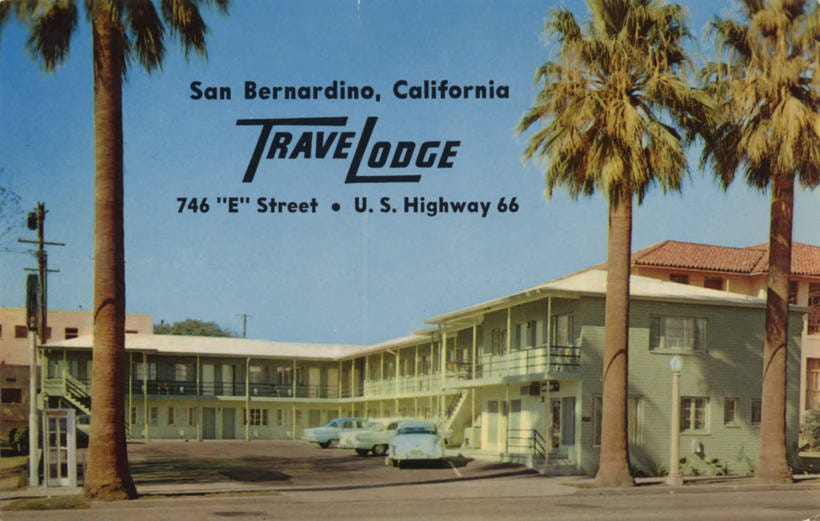
April 1, 1963. You would be forgiven for thinking today’s story concerned a minor league team beginning a new season in San Bernardino, California, approximately 60 miles east of Los Angeles. Major League Baseball rarely comes to California’s Inland Empire. On this occasion, however, the Boston Red Sox and Chicago Cubs had arrived for a spring training game.
The game happened at what is now Fiscalini Field, a small ballpark in Perris Hill Park on East Highland Avenue. Today, it hosts California State University, San Bernardino baseball. It previously hosted San Bernardino’s minor league teams and served as a spring training site for the Pittsburgh Pirates and St. Louis Browns.
In those days, it was not uncommon for teams to play spring training games in smaller markets, especially towards the end as they were preparing for Opening Day. The Red Sox were even scheduled to play in Salt Lake City after this game concluded. In this week’s post, we’re going to San Bernardino to see what was happening as they prepared to welcome Major League Baseball.
The Red Sox and Cubs made the trip into Ontario Airport, 23 miles away from Perris Hill Park, from their spring training homes in Arizona. They were scheduled to play two games. Cubs second baseman and reigning Rookie of the Year, Ken Hubbs of nearby Colton, was the man that everyone wanted to see. The Red Sox were in the middle of a down period while the Cubs had not had a winning season since 1946.
The game was sponsored by the San Bernardino Colt League, which handled the ticket sales for the game. It was projected that around 1,500 fans would show up for each of the two games. The forecast for the April 1st affair was cloudy with temperatures in the lower 60s. A few sprinkles were possible, but nothing substantial was predicted. April is at the tail end of the rainy season in Southern California, and it had been an underwhelming season to that point.
San Bernardino was preparing for its April 9th municipal elections, which the San Bernardino Sun characterized as a “remarkably quiet and peaceful campaign.” However, the incumbent mayor urged his supporters to remain vigilant for last-minute smears.
There was a big advertising push locally for the launch of Busch Bavarian Beer in Southern California. A letter from local distributor Henry Olson of H. Olson Distributing Company of San Bernardino appeared in the Sun, putting a local face on a national brand. Busch had been launched in 1955, largely as a way for St. Louis Cardinals owner Gussie Busch to skirt the ban on naming stadiums after alcohol brands. The stadium was technically named after himself with the beer brand bearing his name being a mere coincidence.
Six local children had been apprehended for removing loose spikes from a stretch of railroad owned by the Santa Fe Railway in San Bernardino. 21-year-old James Wright had accused the San Bernardino Police of brutality after they arrested him for a suspected DUI. He had been diagnosed with a broken nose after the encounter, which he alleged involved being punched in the face by an officer and later handcuffed to a hospital bed.
Despite the forecast, the day began with utterly miserable weather, which one Red Sox player described as more reminiscent of Ontario, Canada than the area around Ontario, California. It was in the 50s with gusty winds that made it feel even colder. The field at Perris Hill Park had been soaked by a morning storm and covered by hail so thick that it left a solid coating of white stones on the field.
It was far from the cloudy 60-65 degree day that had been predicted.
Nevertheless, around 1,000 people made their way to the park to watch the stars of Major League Baseball. The start of the game was delayed by around 45 minutes as the field was being salvaged.
Once the game finally began, the weather proved to be only the first unpleasant part of Boston’s afternoon.
The Cubs scored four runs in the second inning and never trailed. Much of the damage came against Jerry Stephenson, Boston’s highly regarded 19-year-old pitcher from nearby Anaheim. Stephenson had received a reported $75,000 bonus when he signed with the Red Sox, making his appearance another point of local interest. On this afternoon, however, he struggled to find the strike zone.
Stephenson surrendered three hits in the inning, including a double by Lou Brock. He also walked three batters and threw a wild pitch. Ken Hubbs, who had reached on a walk, came home on the wild pitch to score one of Chicago’s four runs.
The fans had come primarily to see Hubbs, but they did not get to see him for very long. He played only three innings and came to the plate twice. In addition to his walk and run scored, Hubbs grounded out in his other appearance. He fell hard at first base when Boston first baseman Dick Stuart made a sweeping tag after receiving an errant throw from shortstop Ed Bressoud. Hubbs escaped with only a minor scratch on his leg.
His brief appearance may have been disappointing, but the newspaper still devoted considerable attention to the hometown star. A series of photographs showed Hubbs ducking away from the wild pitch, running the bases, calling toward a friend and signing autographs for young fans. Even in a game dominated by Chicago’s offense, Hubbs remained the reason many people had come.
The star on the field, however, was Lou Brock.
Brock collected four of Chicago’s 15 hits, finishing with a triple, two doubles and a single. One of his doubles came in the third inning and drove home Ron Santo, who had singled. It extended Chicago’s lead to 5-0.
The Cubs then broke the game open with four more runs in the fourth. Santo hit a three-run homer over the left-field fence, which stood close to the 300-foot mark. Ernie Banks followed Santo and sent another ball over the same fence, giving Chicago back-to-back home runs and a 9-0 advantage.
Boston managed only one hit through the first five innings. The Red Sox finally scored in the sixth when two singles and one of Chicago’s four errors produced a run. Their only significant offensive moment came in the seventh, when catcher Bob Tillman hit a two-run homer over the short left-field fence.
The home run narrowed the score to 9-3, but any suggestion of a comeback disappeared quickly.
Gene Conley took over Boston’s pitching duties in the seventh. The 6-foot-8 Conley was one of the most unusual athletes in professional sports, splitting his career between Major League Baseball and the National Basketball Association. The newspaper joked that the Cubs appeared pleased that he had chosen not to remain exclusively in basketball.
Brock greeted Conley with a triple. Ken Aspromonte followed with a double, and Landrith added a single as Chicago scored two more runs. The Cubs added their final two in the eighth. Steve Boros walked and scored on Bob Will’s triple to right field. Brock then brought Will home with his fourth hit of the afternoon.
Chicago finished with 13 runs on 15 hits. The Cubs committed four errors, but Boston could not take much advantage of them. The Red Sox finished with only four hits and three runs. Their defense committed no errors, which offered little consolation after their pitchers had been battered throughout the afternoon.
The final score was Chicago 13, Boston 3.
The San Bernardino Sun described the game as a “cold slaughter.” The two teams were scheduled to return to Perris Hill Park the following afternoon. After what had happened on Monday, the Colt League joked that it might need to distribute Arctic underwear to anyone willing to come back.
It may have been a miserable day outside the ballpark but inside, it was magic. For those who attended, it was Major League Baseball in San Bernardino.